Don’t let a tent fool you
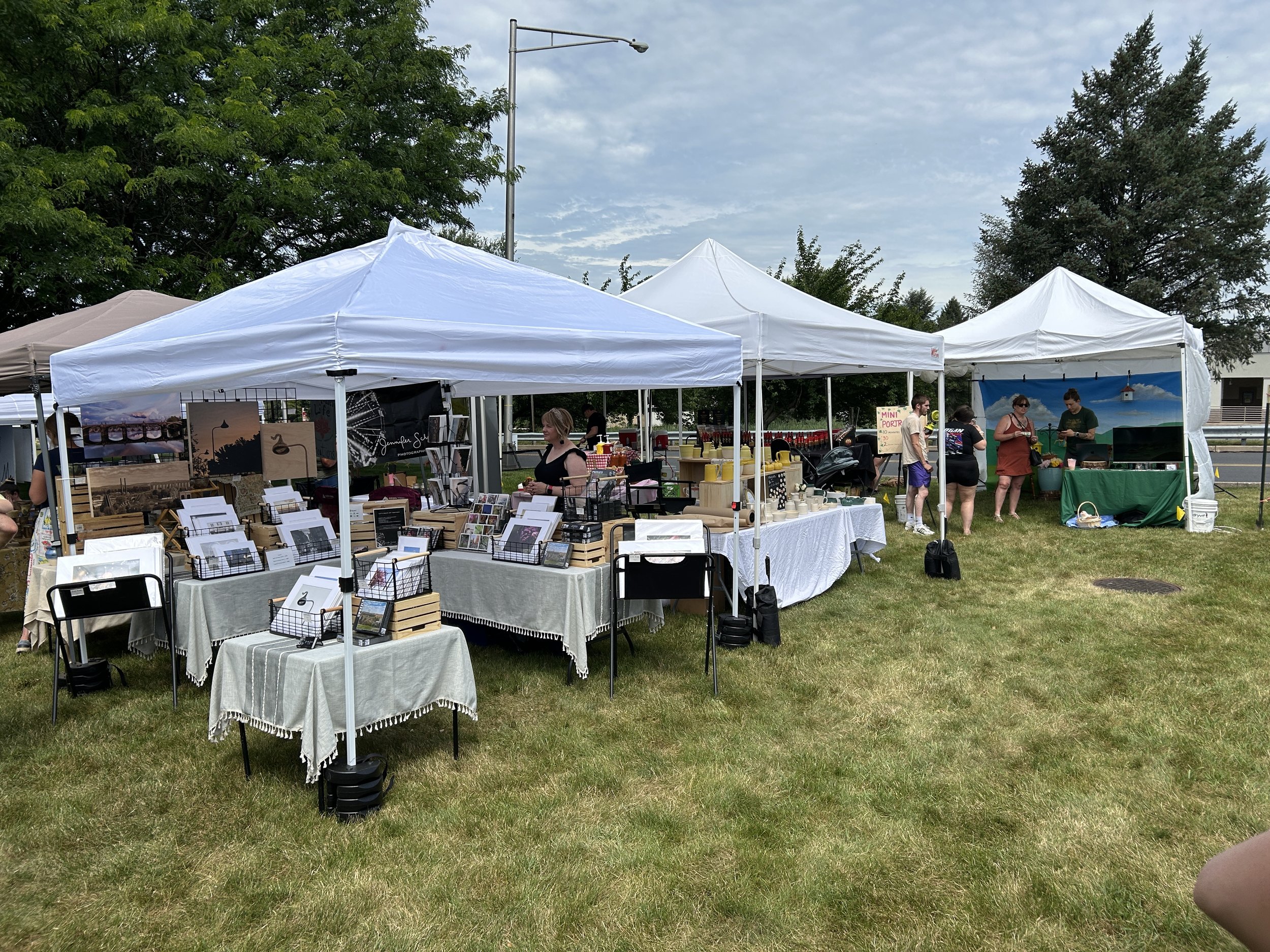
Vendors at one of our Makers at the Museum makers markets.
She approached our tent at Market on Chocolate, a summer pop-up market in downtown Hershey.
This customer asked how much our Keep Pennsylvania Beautiful sticker cost. It's $3, I told her. Next, she asked how much our curated coin pouches cost. That one is $8, I said.
Then she asked whether I would accept $10 for the two items.
I told her that we don't negotiate on our prices.
Principles and prices
I would have liked to earn the sale, but not at the expense of our principles. First, we don't set prices arbitrarily. We offer high-quality products at a good value. Second, it's not fair to other customers if someone gets a better deal simply for asking.
Fortunately, few customers have made such requests in our nearly nine-year history. But it happened recently in State College, too, when a customer who was enamored with one of our ball caps returned a few minutes later and asked whether I would sell a $30 hat at a $10 discount.
I suspect that the presence of a tent makes some customers think that we're more like a yard sale or flea market than a retail business. As a result, they may try to negotiate a price in a way that they never would at a department store and could never do online.
Given the supportive nature of most pop-up market shoppers, I don't think those relatively few customers who ask for a better deal are acting out of malice. More likely, they've simply never thought much about what the pop-up world entails.
We've participated in hundreds of pop-up markets since Stay debuted in 2017. We've also operated a brick-and-mortar store for more than two years, recently moving from Hershey to Elizabethtown.
The reality is that setting up for a pop-up market is way more work than opening the doors of a brick-and-mortar store on any given day.
A four-hour show such as Market on Chocolate is really a six-hour commitment or longer for vendors who can spend an hour or more on each end setting up and tearing down their ephemeral enterprises.
Setting up and tearing down
It’s an extreme example, but consider one of our intrepid Makers at the Museum vendors. To participate in our five-hour show, she and her husband drive more than four hours round-trip and expend an equal amount of time setting up and dismantling their tent.
Weather is another cost of doing business. If you have any doubt about climate change, its effects are plainly evident to anyone who spends any amount of time selling under a tent.
Wind (we keep a bag of hockey pucks at the ready to hold down lightweight tees), heat, cold and rain are frequent visitors.
Besides the products they make (often after hours) and sell (typically on weekends), pop-up vendors travel with tents, tent weights, tables, racks, carts, chairs.
And they pay for the privilege of doing so. We charge $60 for Makers at the Museum, which is on the low end of what vendors typically spend to participate in shows.
I’ve taken no formal polls, but I assume that the majority of my brothers and sisters in the pop-up community wish they could pursue their passion full-time.
But whatever their level of commitment, don’t let a tent fool you into believing their prices are negotiable.
It’s true that pop-up markets come and go, but the vendors who fuel them are running real businesses.