Thanks to pop-up markets, you haven’t seen the last of independent retailing
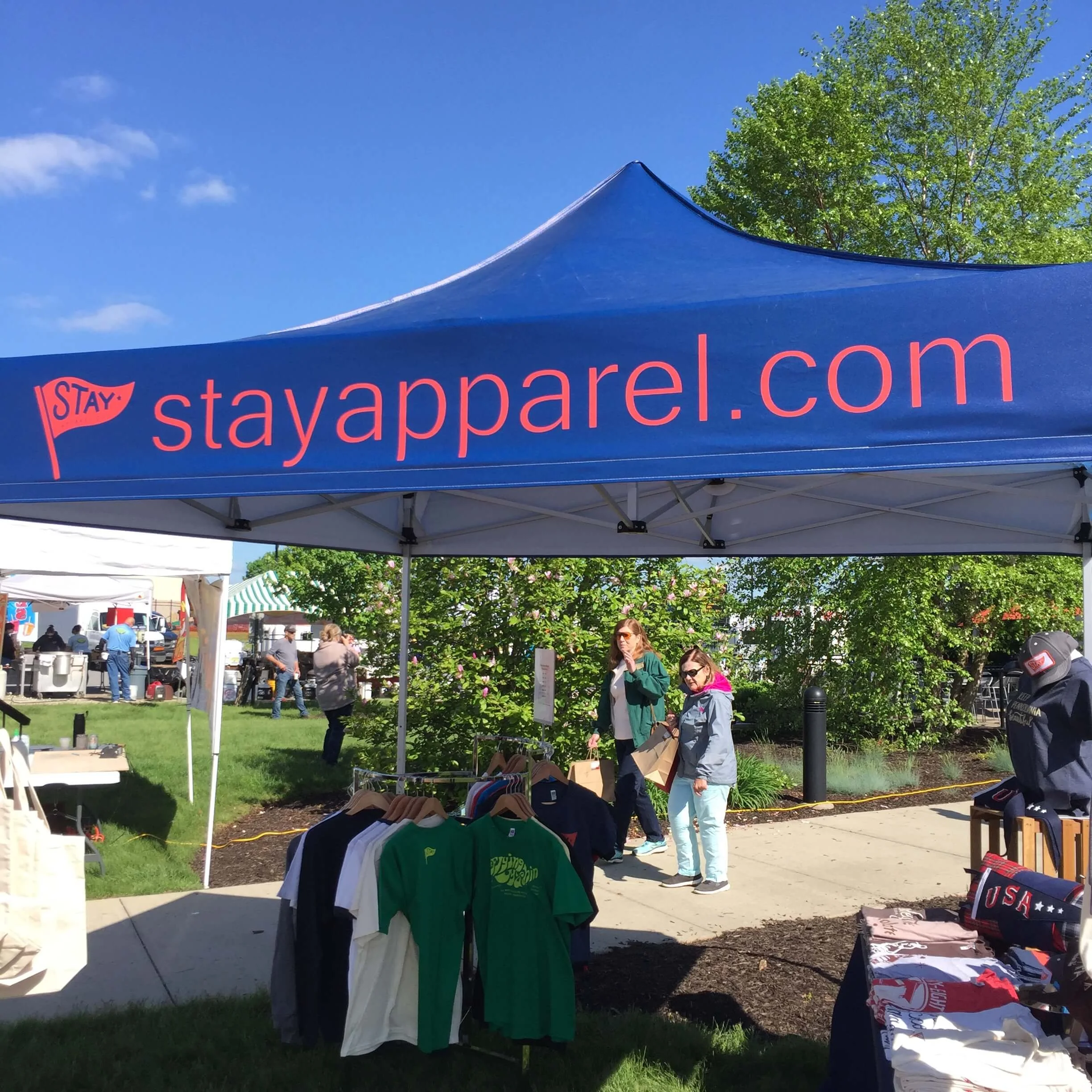
Pop-up markets serve as incubators for makers and other retailers.
In advance of a visit to our store by some 25 Hershey High School seniors studying entrepreneurship, I thought about my own experience at that age growing up in Maine.
Besides an accounting class, business never came up in my years at Lisbon High School. Yet small businesses surrounded me where I grew up on Route 196 in the 1970s and 1980s.
My father operated Apex Cabinet, making kitchens and bathroom vanities. Across the street, Jerry Bonenfant was the owner of a carpet store. On the opposite side of Littlefield Road, at an intersection known as Peppermint Corner, Al Bradbury made chairs under the Bradco name.
In the other direction, Conrad Davis was the neighborhood wunderkind. He started with a seasonal fruit stand in high school and then, after college, opened a landscape business that’s still thriving 50 years later. Just beyond Conrad, Mrs. Hodgkin had a flower shop.
Once upon a time, most retail was local. In 1982, independent retailers enjoyed a market share of 53 percent, compared with 47 percent for chains, according to the Institute for Local Self-Reliance.
By 2017, chains controlled 77 percent vs. 22 percent for independents.
Big-box retailers, consolidation, the Internet, all contributed to this dubious trend.
But all hope is not lost. If the maker movement has any say — and a lot more encouragement and support — it could bring about a resurgence in independent retail.
A Time article in 2014 estimated that 135 million U.S. adults are makers of one kind or another. More than a decade later, fueled by all the spare time that Covid afforded, the number no doubt remains robust.
When we started participating in pop-up markets in 2017, only a handful existed in south-central Pennsylvania. Now there are too many to count. (Not all pop-ups exclusively feature makers; that is, people who create their own products. Some shows allow purveyors of vintage clothing, for instance.)
Business incubators
Yet for as many people attached to it, the maker community doesn’t get the respect it deserves, certainly not from elected officials and community leaders who purport to look out for the interests of small business.
A big part of the problem is the definition of what a small business is. For the National Federation of Independent Business, it’s a company with fewer than 500 employees.
Most makers are one-man or, more likely, one-woman operations, often assisted by family or friends. And most makers don’t belong to associations that could represent their interests, much less do they make campaign contributions that would capture the attention of politicians.
Makers typically have full-time jobs that pay the bills while their real passion — be it pottery or jewelry, woodcrafting or candle making, photography or art — is a “side hustle.”
As such, most makers markets take place on Saturdays and Sundays, the only days when artisans have the time to sell their goods. I’ve likened pop-ups — without any intended irony — to a circus come to town, here and gone.
Yet makers markets are so much more than that. They’re business incubators, allowing artisans to field-test their ideas at a modest cost. Many of us have years-long track records of selling profitably at makers markets, building loyal, if modest, followings among consumers.
Consumer foot traffic and news media coverage certainly suggest that there is demand for makers/pop-up markets, but broader opportunities that would elevate the movement to a next level don’t regularly present themselves.
Need a nudge
Some makers dip their toes in a brick-and-mortar presence by renting shelf space in a permanent artisan market, such as Prussian Street Arcade in Manheim and Lancaster and Artisan Mill Co. in Lititz.
I pondered that option but ultimately concluded that a T-shirt display is too easily wrecked in a short amount of time. And without the ability to constantly re-fold tees, which the hosts would not do, it would reflect poorly on our brand and be counterproductive.
We opened our physical store in 2024 at the Hershey History Center, in the milk house of the former dairy farm and later Milton Hershey School student home. The space is fabulous, but building regular foot traffic to it is a work in progress. That’s why we continue to participate in pop-up markets, some 30 in 2025.
To be sure, not every artisan is ready, willing or able to commit to a full-time store. But many might team up on space were it more available and affordable. They have the goods; they might just need a nudge to get them to take the next step.
Just look at how home brewing led to a boom in craft breweries once demand for unique local products aligned with easier access to capital.
If I were a developer with a building to spare, I might create a “permanent” pop-up market, with a regular schedule of rotating artisans.
Or if I were tasked with bringing retail to a downtown, for instance, I would spend a lot of time attending makers markets. They are filled with smart, talented, people who create unique, locally made products.
Independent retail is hurting. Makers are everywhere, working to save it.