‘Shop local’ is important, but you still have to be wary of imported products
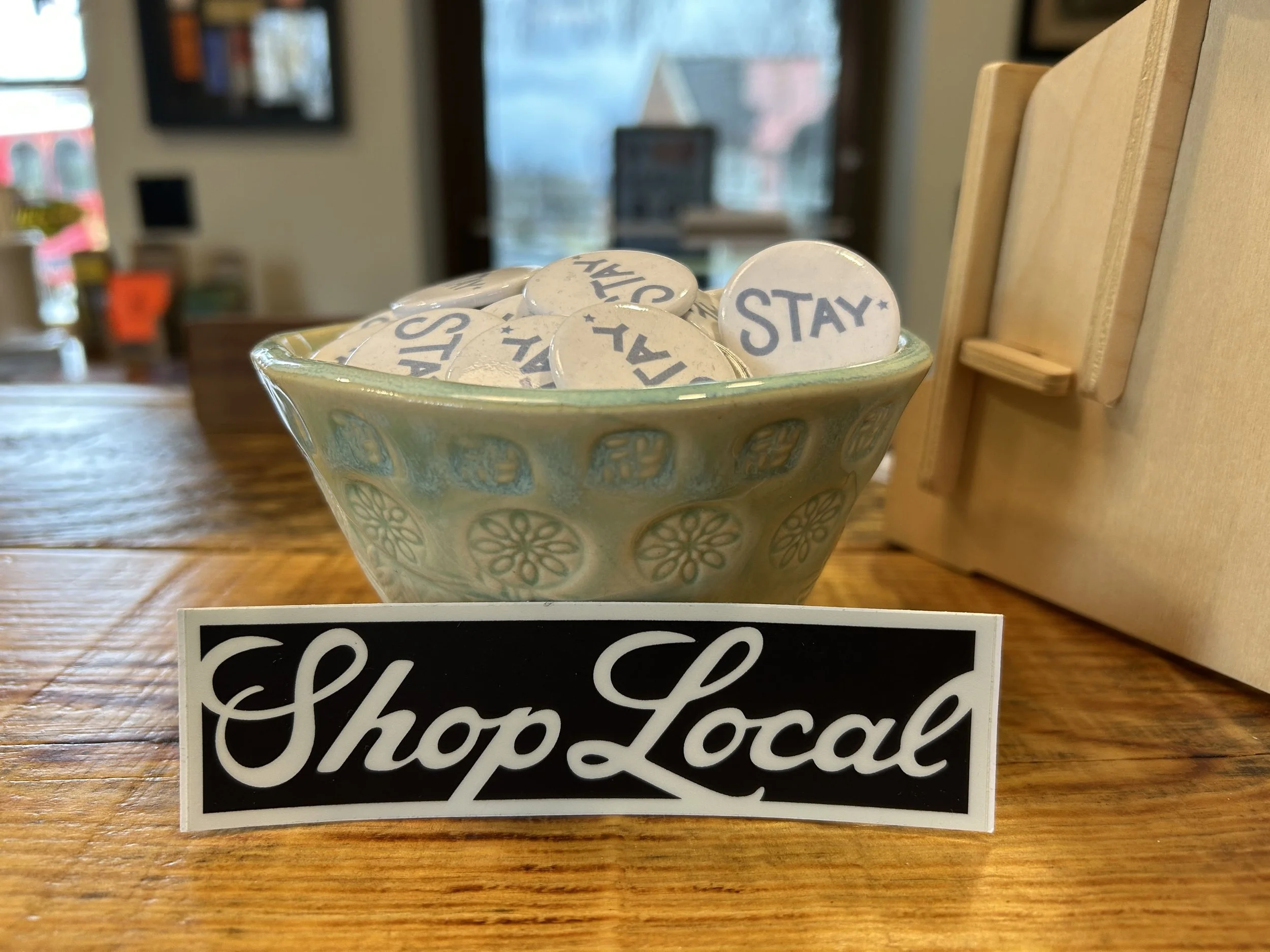
Sticker courtesy of Fresh Fish, Audubon, N.J.
I’ve never met Jake South. I don’t know where he lives or what he does beyond his fantastic web resource, Southland Heritage.
It’s billed as, “The ultimate destination for Made in USA clothing and gear,” and it’s at least among the best. (The book “Crafted with Pride” and Stay’s online directory are fine references, too.)
While not acquaintances, Jake and I are kindred spirits, true believers in Made in USA. And so I take note of what Jake says, particularly a recent Instagram reel in which he challenged the “shop local” mantra, which is so intertwined with the maker movement.
He said he had seen a “shop local” sign adorning a sex shop, whose products, he presumed, are made overseas.
“Does anyone else see the problem here?,” South said. “We should be thinking ‘shop domestically,’ and I know I say that all the time so it sounds redundant, it doesn’t sound as impactful as I think it does, but shop local, shop domestically, that should be our goal.”
The road to imports
Given two similar stores, one that’s part of a big chain and the other owned by a local person, I’d prefer to give my money to the latter.
Locally owned stores tend to keep money circulating nearby compared with chains, which could be based in another state or even another country. A local owner presumably is more attuned to and supportive of charitable needs locally, too.
But my loyalty to local owners only goes so far: I will go where the American-made goods are, even if that’s online.
I know of local retailers that are no better than chained-owned stores when it comes to sourcing their inventory. They attend massive trade shows in pursuit of the latest trend, the lowest cost, quantity more than quality.
A trip down that road typically arrives at the door of imports.
Of course, American-made options aren’t always available, but there’s also an element of laziness on the part of retailers who are content to go with what’s easiest to get. It’s far less taxing to shop en masse at a trade show than to painstakingly curate American-made products.
Members of the artisan/maker community are guilty of this, too. They inherently produce American-made products, but some of them source raw materials without a lot of consideration for country of origin.
I encourage retailers and makers — and the consumers who support them — to think hard about where they spend their precious dollars. Seek out American-made options; it’s at least worth the ask.
Make “shop local” mean something by emphasizing those products that are made locally, in communities across America.